


Enter our Virtual Gallery of
MINERALMINERS.COM®- Your Personal 'Link' Direct to the Cats Eye Quartz Mines!TM
Links To Cats Eye Quartz Information Topics On This Page:
 Return to the Index of Cats Eye Quartz Information Topics
Cat's-eye quartz is a macrocrystalline variety of the mineral Quartz (SiO2). Quartz is the most abundant single mineral on earth. It makes up about 12% of the earth's crust, occurring in a wide variety of igneous, metamorphic and sedimentary rocks.
Quartz varieties are commonly separated into two groups based on the size of the individual grains or crystals; macrocrystalline quartz in which individual crystals are distinguishable with the naked eye, and cryptocrystalline quartz in which the individual crystals are too small to be easily distinguishable under the light microscope.
The most well known macrocrystalline quartz variety is Rock Crystal.
Some of the other macrocrystalline quartz varieties are: Amethyst, Ametrine, Citrine, Phantom Quartz and Cat's-eye Quartz. Some other very well known macrocrystalline quartz varieties are Rose Quartz, Rutilated Quartz & Smoky Quartz.
Blue Aventurine Quartz and Green Aventurine Quartz are actually quartzites (a rock, not a mineral) composed essentially of interlocking macrocrystalline quartz grains with disseminated grains of other color imparting minerals.
The cryptocrystalline varieties of quartz may be separated into two types;
fibrous and microgranular. Chalcedony is the general term
applied to the fibrous cryptocrystalline varieties.
Agate is a common example of a fibrous cryptocystalline
banded chalcedony variety of quartz. Carnelian, Chrysoprase and bloodstone
are other chalcedony varieties.
Chert is the general term applied to the granular cryptocrystalline
varieties of quartz, of which flint and Jasper are examples.
Go Up to the Index of Cats Eye Quartz Information Topics
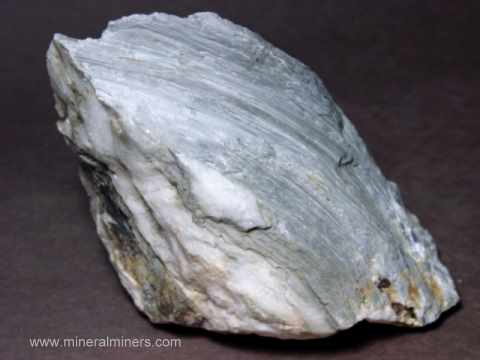
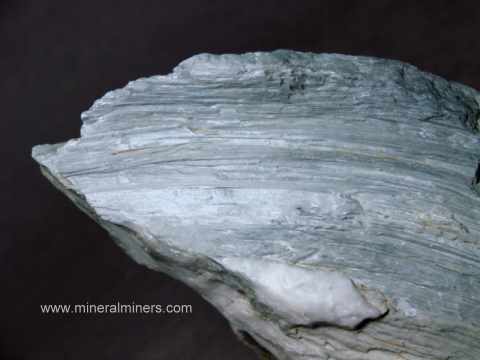
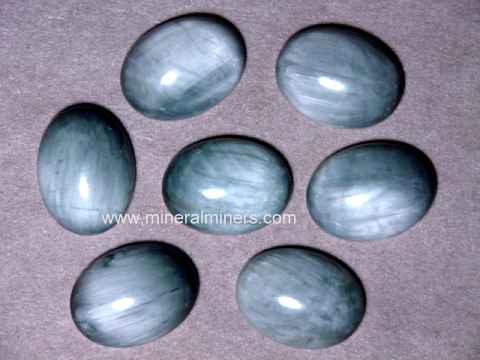
The chatoyant or cat's-eye effect visible in some quartz is usually
due to the presence of asbestiform (fibrous) mineral inclusions or tubelike cavities in
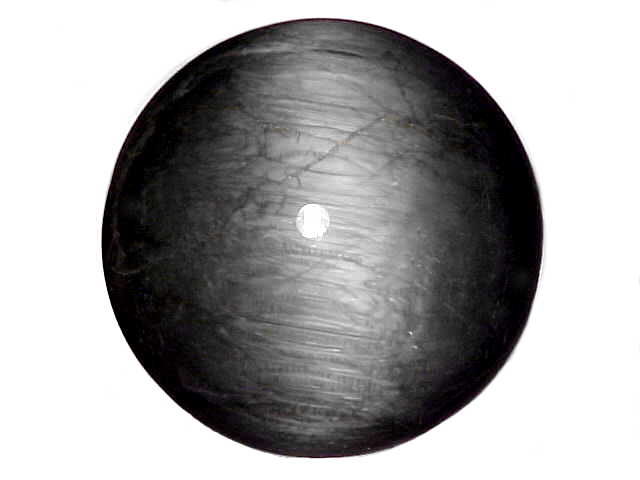
parallel orientation within the quartz. These parallel oriented features reflect light in
the form of a well-defined bright band which moves across the surface of the material as
it is turned. When fashioned with a rounded surface or "cabochon" shape, this "cat's-eye" effect
is much more pronounced.
Cat's-eye quartz usually forms in quartz veins, typically with massive
milky quartz bordering the vein
and quartz crystals of increasing transparency growing in toward the center,
the quartz growing around and
enveloping the fibrous minerals already present in the vein.
Cat's-eye quartz is generally recognized by its chatoyant luster and hardness. It can be identified as quartz by its crystal habit,
transparency, hardness, conchoidal fracture, occurance
and general lack of cleavage.
Go Up to the Index of Cats Eye Quartz Information Topics
Pliny wrote nearly 2000 years ago that quartz crystals formed from ice by intense cold for long periods of time in dark clefts and caverns in the mountains. This general belief was popular in diverse cultures until the eighteenth century, when modern geology began to develope in Europe.
Cat's-eye quartz has been used as gemstones and other ornamental and religous objects for thousands of years. It has always been thought to bring good fortune to the wearer.
The name cat's-eye refers to the similarity of the slit shaped pupil in the eye of a cat to the optical phenomenon exhibited by the inclusions in the quartz. The name quartz comes from the Saxon word querklufterz which meant cross vein ore.
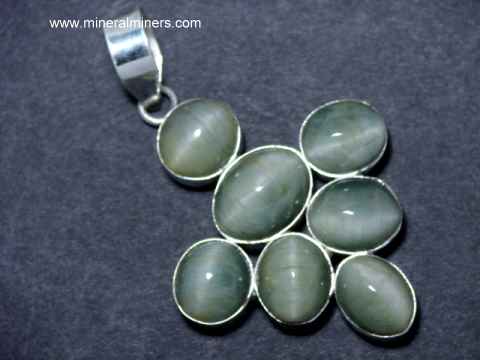
Cat's-eye quartz is said to bring good judgement and provide deeper understanding. It is also said to enhance intuition and to increase one's psychic abilities and powers of concentration.
Cat's-eye quartz has been used to treat vision disorders and is considered to be a powerful stimulus for one's self-healing abilities.
For more in-depth metaphysical information, see our Metaphysical Books section.
Go Up to the Index of Cats Eye Quartz Information Topics
|
|
|
|
|
 |
 |
 |
Go Up to the Cats Eye Quartz Information Topics Index